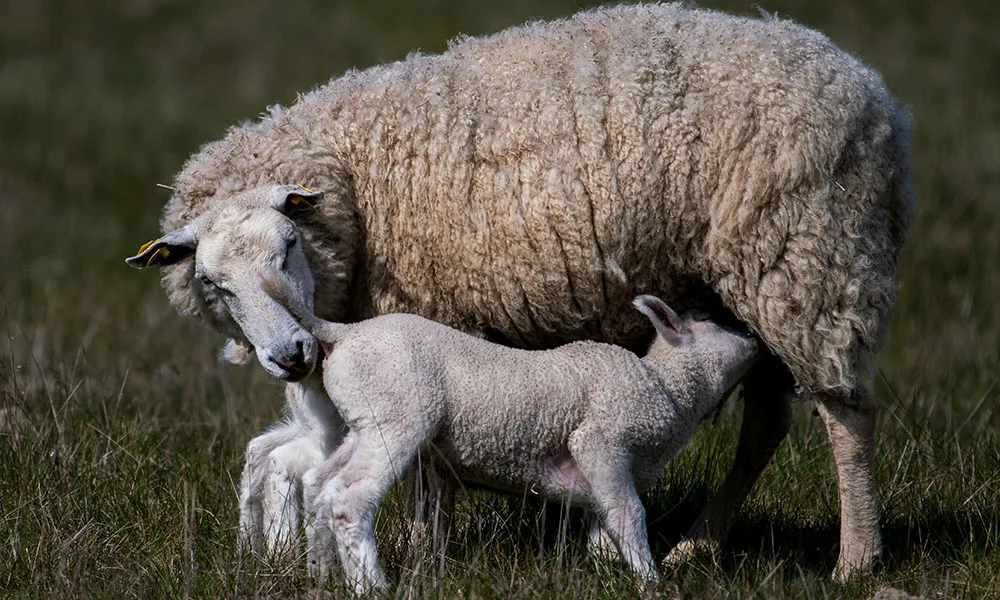
Lambing is now getting underway in many parts of the country and while we always hope that ewes will be able to deliver lambs without assistance, this is often not the case. No matter how many precautions you have taken and how healthy you believe your animals are, intervention will always be necessary in some cases. That’s why we at Agridirect.ie have put together this brief guide to delivering lambs safely and successfully.
Hygiene, hygiene, hygiene
At the risk of sounding like a broken record, it is absolutely crucial that you observe good hygiene when preparing to deliver a lamb. Whether your intervention takes place indoors or in the field, you should take the following steps before handling the ewe:
- Wear Gloves: Always wear clean gloves when assisting with lambing, as this reduces the risk pathogen transmission and protects against potentially fatal zoonotic diseases.
- Sterilize Equipment: All lambing equipment, such as lambing aids and ropes, should be cleaned and sterilised before and after use.
- Disinfect Navels: Make sure you have a good disinfectant, such as iodine or propolis, on hand; and treat the lamb’s navel immediately after the animal is delivered. You should treat again 4-6 hours later to mitigate against infection.
- Personnel Safety: Make sure that you wash your hands thoroughly before and after handling animals. Pregnant women should not participate in lambing interventions.
How to assist the ewe
If you have been watching the ewe for some time and are certain that she is in difficulty, you should not hesitate to intervene. Ideally, you should get a second person to assist you, particularly if you are lambing outdoors, as the ewe may need to be restrained. You should always try to soothe the ewe, bearing in mind that this is a traumatic experience for her.
Following the measures below will improve your chances of delivering a healthy lamb while also protecting the ewe:
- Be patient: This is essential. If you pull too fast, you risk harming both mother and lamb. Pull gently, as it takes time for the cervix and vulva to relax and stretch to avoid tearing the vaginal canal or cervix.
- Work with the contractions: Do not “pull against” the ewe. Only pull when she is pushing (contractions). Give her time to breathe between each contraction.
- Pull downwards: It is very important that you direct your pull downwards, towards the ewe's hocks. Never pull upwards or straight out.
- Always lubricate: Using a suitable lubricant will help ease delivery.
- "One at a Time" Technique for front legs: If both front legs are present, do not pull them at the same time. Instead, you should pull them one at a time as this will help ease the shoulders through the pelvis.
- Handling the Head: As the head emerges, you may ease the skin of the vulva over the lamb's head.
- Stuck at the Hips: It is very common for the lamb to get stuck at the hips. If this happens, try changing the direction of pressure by pulling the lamb between the ewe's legs and over the udder.
- Positioning: If the lamb is stuck, it may help to turn the ewe on her side or back (though this is not guaranteed to work in all cases).
After delivery
After the lamb has been delivered, gently remove any mucus or membranes from the mouth and nose. Make sure that the lamb gets adequate colostrum (at least 50ml/kg) within the first few hours. If lambs are suffering from hypothermia, it may need an intraperitoneal (IP) glucose injection, followed by warming.
Veterinary assistance
Some deliveries are too complex for many farmers. If this is the case, do not hesitate to contact your vet. This is particularly important if you judge that the lamb is too large, as a caesarean section may be required. You should also seek help from a vet if you suspect that the lamb is incorrectly positioned, especially if it is breach.